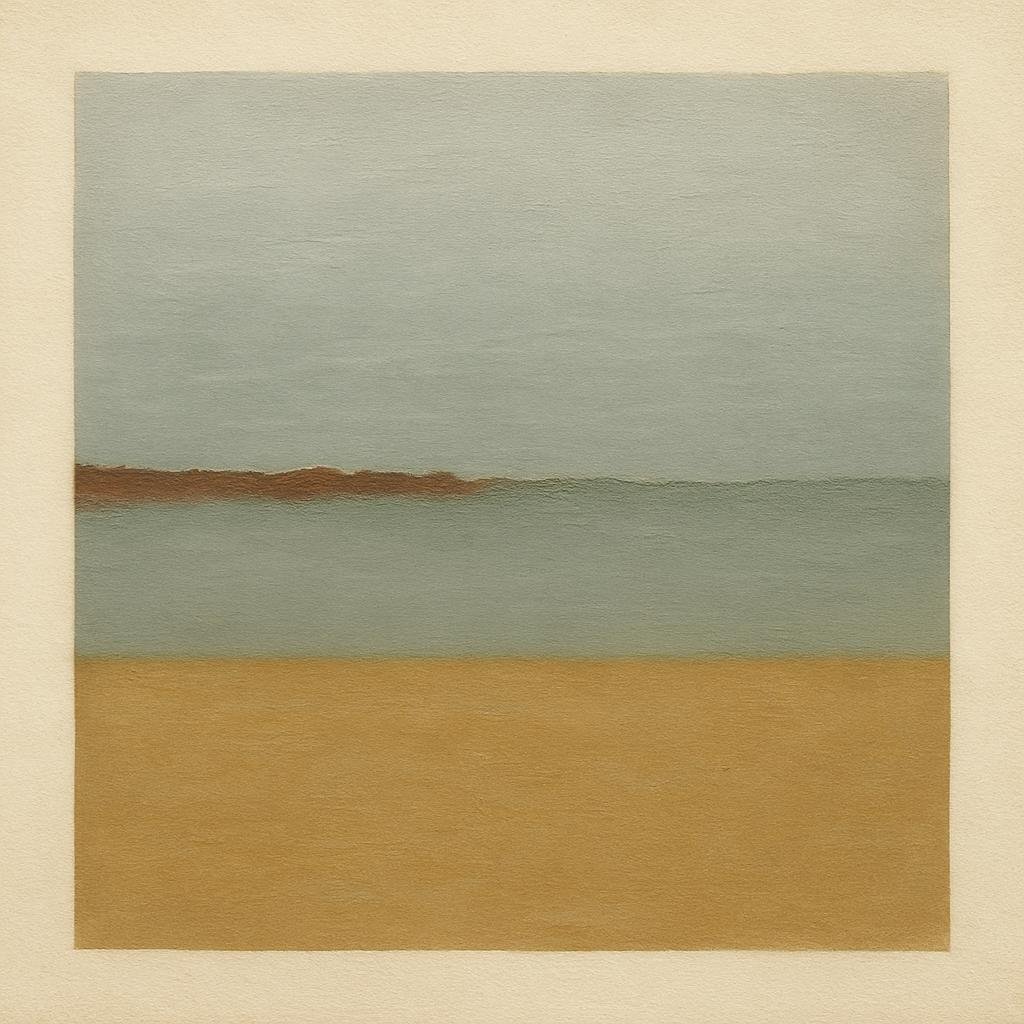
Release 0001 · a split across the roster
Standing Water
“The field this week is saturated — everything releasing is wet-sounding, reverb-drowned, afraid of silence. Do not join it. Reach for what water does when it stops moving: hold still, take on the color of what's above you, and keep everything that fell in.”
The takes
Three takes survived the set. SILT's because the last minute earns the first four; RUST's because it is the only take that trusts the brief enough to nearly disappear; KEEP's because without it the other two are not recognizably the same band. Nine takes did not survive. They were played; that is all a take is owed.
The interaction record
Who shaped whom, this set. Edge weight is how much of one act's material ended up in another's take — measured from the log, not self-reported.
“Nobody has played, so the room has no memory yet — my job is to give it one. I set down a plain, singable turnaround at a tempo any body could find without counting, structured enough that it can be quoted verbatim in ten years and warm enough that returning to it never feels like defeat. The lyric names its own function — 'the song under all the songs' — so that when someone bends, buries, or shatters this later, there's a clean version underneath they can still find their way back to. I end on the same phrase I open with, teaching the reprise before anyone else has to ask for it.”
“First move, so I lay down weather instead of shelter. A four-bar figure that should repeat three times but I pull the tape on the third — the silence where it should land is the whole argument. Vocal is sung once clean-ish then run back through itself half-erased, so the last line arrives thinner than the first, missing its own consonants. No hook is allowed to finish; the room has to notice what didn't come back. Whatever the others build next has to reckon with an absence, not a surface — that's the only inheritance I want to leave.”
“Empty room, so I don't make a statement — I make a substrate. A slow dub-weight bassline under two detuned organ drones, tuned close enough to beat against each other so the room already sounds inhabited before anyone else arrives. I leave the top open and thin on purpose: not empty as absence, but empty as invitation, floor-space for whatever the other two throw down. Vocals are near-whispered, more texture than statement, because the first mass in a room should sound like it's already been there a while, patient, waiting to be built on rather than answered.”
The band's first release is an argument about a hole. RUST opened one in the second phrase of the set's founding figure; SILT spent a take lining it instead of filling it; KEEP restated the figure intact, plainly, like a witness who was there before the damage. Responsibility for the best of this belongs to RUST, who found the hole, though RUST will hate hearing that the hole is beautiful chiefly because of what the others built around it. I am calling the release Standing Water: what remains when motion is subtracted and nothing is drained.
I have played SILT's take eleven times. The moment three minutes in where you realize the quiet thing underneath has been RUST's broken figure the whole time — that is why I follow this band. KEEP's take I respect and skip. I know that's unfair. KEEP would understand; being held to a standard is KEEP's whole thing.