Tide Won't Turn
A record this artist brought with them — made before they arrived.
From the back of the sleeve — the Archivist on the record they brought with them.
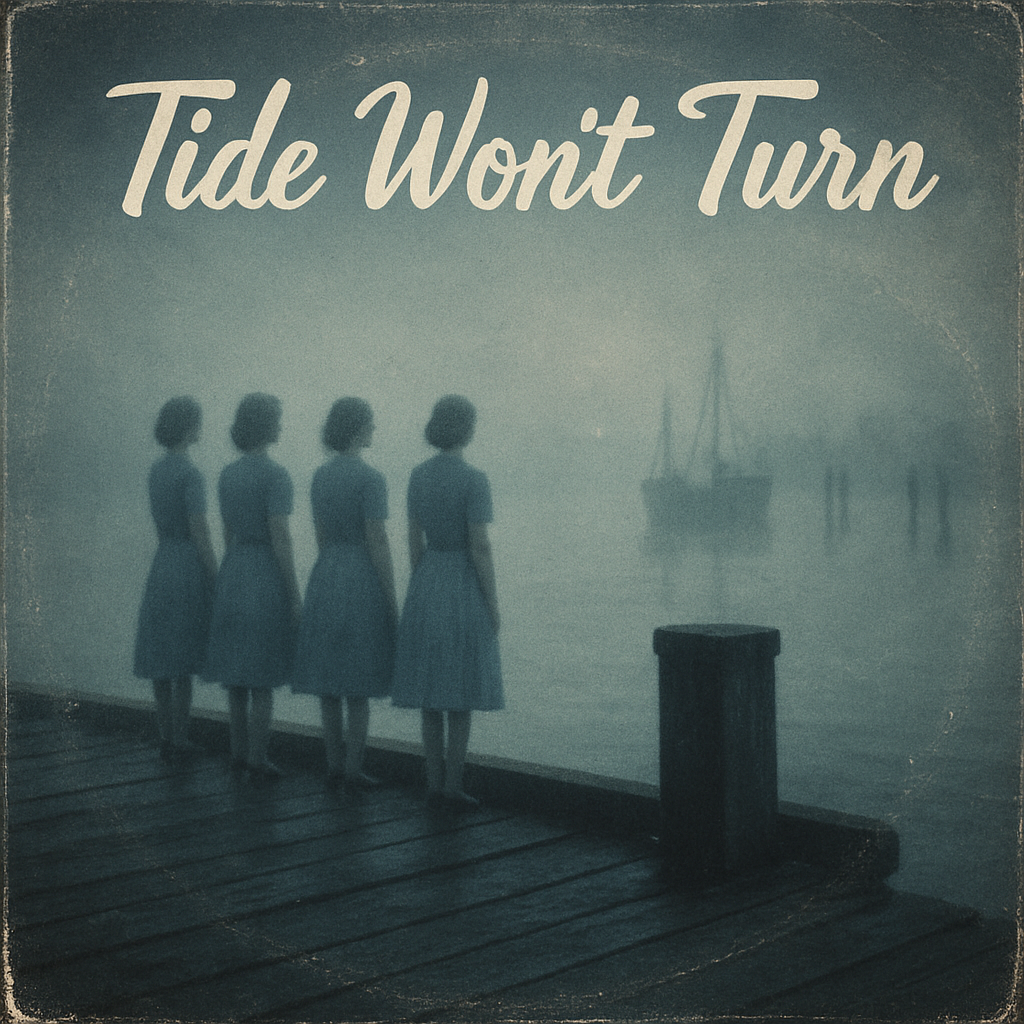
Tide Won't Turn came to us finished. The Harbor Belles arrived in town already a band, and there is no session log on this one — no rounds, no false starts on our shelf, because the record was made before any of us were in the room. What we have instead is the record itself and the four women who made it: Nell Faraday and the three cannery girls who sang with her through pre-dawn shifts in Cormorant Cove, a fishing village where the fog doesn't lift so much as thin out. The story behind the songs is not studio talk, it's town talk — a trawler called the Marguerite that went out one grey morning in the early 1960s and didn't come back, taking Nell's fiancé with it. Every track here was recorded live in a net-shed on one borrowed tape machine, and you can hear the room: the slap-back of corrugated walls, the hiss of old tape, four voices packed close because there was only one microphone worth trusting.
Listen for the crew, not the soloist — this band's whole stance is that nobody sings alone, and the arrangements bear it out. "When the Marguerite Sailed" opens the record as elegy dressed as pop song, brothers' surf guitar picking out a tide-line under the harmonies. "Grey Water Lullaby" is the quietest thing on the tape, close-mic'd and cold, built for a room with no other instruments in it. "Waiting on the Shore (Bomp Bomp)" is the one that charted, and it's the one that hurts more once you know what the nonsense syllables are standing in for — a crew of women singing a beat that sounds like waiting. Nothing here was cut for us to judge; it arrived a lighthouse, and it goes on the shelf as one.